Play for Today at 50 symposium report and Statistical History Appendix

I was delighted to speak yesterday at a fantastic event, Play for Today at 50, from 10.50am, on a panel including Simon Farquhar and John Cook and chaired by Katie Crosson. This necessarily Zoom-based event was on the fiftieth anniversary day of the first broadcast of PFT, as rebranded from The Wednesday Play (1964-70). I outlined a statistical history of the PFT strand, using data visualisation, which would have been infinitely less striking without Rachel Queen’s help!

Simon Farquhar (writer and dramatist) spoke eloquently and emotionally about the small domestic strain of PFT which is rooted in deep emotional truths, lovingly explaining the quality of Julia Jones, Colin Welland and John Challen’s work. John Cook (Glasgow Caledonian University) added to Simon’s extolling of the video studio aesthetic, in deeply questioning “the inexorable logic of film”. John also gave an invaluable account of interviewing Graeme McDonald and made the point that while seen by some as a bland figure, he was a very efficient producer, responsible for producing 4 of the 6 Plays for Today that won BAFTAs for ‘Best Single Drama’, including Spend Spend Spend (1977) – plus, two McDonald-produced PFTs contained ‘Best Actor’ performances: John Le Mesurier in Traitor (1971) and Celia Johnson in Mrs Palfrey at the Claremont (1973). John’s critical account of institutional change and the anti-video turn was compelling and elegiac with an underlying polemical edge.

The next panel, which I chaired, featured Vicky Ball (De Montfort University) outlining statistics which complemented my own, discerning a decline in the percentage of women working on TV plays from the 1950s to 70s. However, her findings, which accord with mine, noted the significant fact that in Play for Today’s final third (1980-84), 50 per-cent of PFT‘s total credited women writers were employed. There was a definite improvement, following Margaret Matheson’s enabling of Mary O’Malley (RIP) and Caryl Churchill, producers like Innes Lloyd, John Norton, W. Stephen Gilbert, Kenith Trodd and Alan Shallcross all commissioned work by women writers in this era. Vicky also presented interview testimony from writer Paula Milne about her experiences in working at the BBC, some of which were, as Katie Crosson rightly claimed, was “harrowing”. Next, Eleni Liarou (Birkbeck, University of London) outlined a fascinating range of Plays for Today that engaged in complex representations of race including many I must watch: Murder Rap (1980) and Three Minute Heroes (1982), which Helen Wheatley (Warwick University) and others presented for a public screening in Coventry Cathedral in 2018.

Then, Katie Crosson (Royal Holloway, University of London) discussed elisions from the canon of publicly remembered creative personnel on Play for Today, especially championing writer Carol Bunyan (Ladies 1980, Sorry 1981) and producer Irene Shubik and eloquently adding to mine and Simon’s case for Colin Welland as an incredible powerhouse of an actor-writer. Katie’s timely and forceful talk is supplemented by her evocative online exhibition hosted by the BFI and BBC here.

The Q and A included an intelligent discussion from all of the narratively well justified blackface sequence in Barrie Keeffe’s Waterloo Sunset (1979), as well as a lament that nobody seemed to have interviewed Rita May, who wrote England’s Green and Peasant Land (1982). In response to a question from John Wyver, Eleni persuasively argued that PFT was generally one of the more progressive programmes in its representations.

The final panel began with Jonny Murray (Edinburgh University) who contrasted the Scottish-themed plays made from BBC London (though usually filmed on location in Scotland) with a corpus of 14 neglected PFTs made by BBC Scotland. Even I have only seen one of them, Alma Cullen’s neglected delight, Degree of Uncertainty (1979), video-recorded on OB in Edinburgh. In the chat, Vicky Ball and I agreed it was reminiscent of Willy Russell’s stage drama Educating Rita (1980) and Vicky compared it to Helen: A Woman of Today (1973). Simon Farquhar was vocal in criticising the calibre of some of the BBC Scotland plays, which led to lively discussion! Jonny did a vital service in bringing this neglected corpus to our attention: hopefully with a widening of access more than just a select band of academics and enthusiasts may get a chance to decide for themselves…

Finally, John Hill (Royal Holloway, University of London) characterised the 1980s Northern Ireland plays as generally conveying a more consistent bleakness regarding the Troubles, whereas he argued that a range of 1970s Northern Ireland-set PFTs were far more various and complicated in their representations of the Six Counties. Drawing on archival sources and close viewing, Hill incisively compared Carson Country (1972), Taking Leave (1974), The Dandelion Clock (1975), Your Man from Six Counties (1976) and The Last Window Cleaner (1979) – an absurdist comedy which sounded a one-off even among one-offs. John ended on the salient point that the sort of “hard man” working-class Catholic culture Peter McDougall portrayed on screen was echoed by Graham Reid and Paul Seed’s presentation of the violent Thomas Martin (James Ellis) in the Protestant Belfast-set Billy trilogy (1982-84). Aggression and a degree of toxic masculinity were common across sectarian cultural divides.

Most significantly of all, the event included interviews with several of the most important producers and script editors who worked on the show: Tara Prem, Sir Richard Eyre, Peter Ansorge and Kenith Trodd. Ken’s wonderfully rich reminiscences were a vital counterpoint to Simon and John C’s well argued cases in favour of the VT studio aesthetic. There was exemplary interviewing from Simon, Vicky, Ian Greaves and John Wyver, who wrote and directed Monday’s sterling BBC Four documentary Drama out of a Crisis: A Celebration of Play for Today.

Earlier, John had opened the event with a keynote lecture on Wednesday evening, from 6.30pm – 8pm. This discussed his personal history with Play for Today from watching Robin Redbreast as a fifteen year old to writing previews (basically review critiques!) for Time Out magazine and attending the location shoot of Plays for Today including Long Distance Information (1979).

Most crucial of all to the smooth running of this symposium was Lilly Markaki (Royal Holloway, University of London) who kept the whole Zoom show on the road. This helped facilitate what will hopefully become many new ideas, projects and friendships. It all felt like that much abused term, a community: dedicated to understanding the past better and looking forwards.

To complement my paper, which aimed ambitiously (!) to provide a broad statistical history of the Play for Today strand within 15 minutes, I have a few extra morsels of research to share. Please correct me if I have made any errors, or if you are aware of any productions I may have missed; this would be a great help and I would be most grateful.

Firstly, I have a provisional list of the Plays for Today that were original commissions for television* but which were subsequently turned into theatre productions. They are listed in chronological order of original PFT transmission date (in brackets, followed by the date of the first theatre adaptation and place of production if known):

  1. John BOWEN – Robin Redbreast (1970 / 1974 – Guildford, Surrey)
  2. Adrian MITCHELL – Man Friday (1972 / 1973 – London)
  3. Dennis POTTER – Only Make Believe (1973 / 1974 – Harlow, Essex)
  4. Bernard KOPS – Moss (1975 / 1991 – London)
  5. Jack ROSENTHAL – Bar Mitzvah Boy (1976 / 1978 – London)
  6. Jack ROSENTHAL – Spend Spend Spend (1977 / 1981 – Oldham, Gt. Manchester)
  7. Mary O’MALLEY – Oy Vay Maria (1977 / 1996 – Oldham, Gt. Manchester)
  8. Caryl CHURCHILL – The After Dinner Joke (1978 / 1998)
  9. Wally K. DALY – Butterflies Don’t Count (1978 / 1982 – London)
  10. Mike STOTT – Soldiers, Talking Cleanly (1978 / 1981 – London)
  11. Dennis POTTER – Blue Remembered Hills (1979 / 1985 – Edinburgh)
  12. Andrew CARR – Instant Enlightenment Including VAT (1980 / 1981)
  13. Peter RANSLEY – Minor Complications (1980 / 1984)
  14. Graham REID – Too Late to Talk to Billy (1982 / 1990 – Belfast)**

Appendix of an appendix! The following seem loosely related to previous PFTs rather than adaptations as such? :

Barrie KEEFFE – King of England (1988) – King (PFT 1984)
Barrie KEEFFE – Not Fade Away (1990) – Waterloo Sunset (PFT 1979)

* I have also included Spend Spend Spend which was an original commission for TV, but which originated in transcripts of interviews with Vivian Nicholson that Jack Rosenthal then fashioned into a screenplay.
**I am unsure as of yet whether the second and third Billy plays have been staged. Surely they have been in Belfast at some point?

List of Plays for Today that were later made as films (if adaptations the original writer is noted; in bold if they were original PFTs):

  1. Adrian MITCHELL – Man Friday (1972 / 1975)
  2. Colin WELLAND – Kisses at Fifty (1973 / 1985 – as Twice in a Lifetime)
  3. Elizabeth TAYLOR (novel) – Mrs Palfrey at the Claremont (1973 / 2005)
  4. Helene HANFF (novel) – 84 Charing Cross Road (1975 / 1987)
  5. John BYRNE – The Slab Boys (1979 / 1997)
  6. Robert C. O’BRIEN – Z for Zachariah (1984 / 2015)

N.b. Not including Brimstone and Treacle (1976 / 1982) or Scum (1977 / 1979) as they weren’t broadcast as PFTs during its run. Maeve (Dir. James Ormerod, CAN, 1987) was a TV Movie follow-up to Graham Reid’s Billy trilogy.

MAY’S MINIATURES – S.01 E.10: J.G. Ballard – ‘The Largest Theme Park in the World’ (1989)

Photo (c) Fay Goodwin, The British Library Board

Welcome to the last episode of series 1 of May’s Miniatures. If you’ve enjoyed this series at all, please get in touch and suggest other stories or writers you’d like featured in a possible, if not probable, future series! Feel free to add comments on the posts that are on the May’s Britain blog.

Now, this final selection is a short story from one of my favourite writers. You don’t have to be Will to self-diagnose as a Ballardian. I love his work as it is sardonic, strange and taps into undercurrents of our human consciousness that most writers shy away from. Ballard’s work is like a literary equivalent to Max Ernst’s surrealist paintings but with an utterly matter of fact tone to its weirdness. You can’t help but hear his words resounding inside your head as if delivered by a BBC announcer from the Sixties, but who has unknowingly ingested some weird substance – and we’re not talking bleach!

He is not alarmed or moralistic about modernism, about the modern life of cars, motorways and consumerism, but nor is he Panglossian about it. He perceives troubling currents and subtly under plays them. This story is from later era Ballard. He was in his fourth decade as a writer, and wrote this soon after Margaret Thatcher’s pivotal Bruges Speech of 19 September 1988 which was critical in how the UK Conservative Party changed from being a pragmatically pro-European capitalist party to one torn between this and proto-Brexiting euroscepticism. This was published on 7 July 1989 in the Guardian newspaper, accompanied by a Steve Bell cartoon. This was four months before the restrictions between East Germany and West Germany were lifted, and the Berlin Wall took on new historical meaning. This story is incredibly prescient not just of events since 2016, but seems to parallel… In some ways… the, yes, cliché-alert…! strange times we are living in RIGHT NOW…!

Broadcast here on YouTube on Tuesday 11 August 2020:

This story brilliantly depicts cross-European middle class rebellion of leisure with a distinctive English iteration with seemingly divergent tendencies – green, feminist, sporty, Thatcherite. It observes the undercurrent beneath our cultural observance of the Protestant Work Ethic, which could apply on a much wider cross-class basis, given how beloved our holidays in Spain, Italy and Greece are to us.

More detailed thoughts to follow subsequently.

MAY’S MINIATURES – S.01 E.09: Angus Wilson – ‘Raspberry Jam’ (1949)

Ahhhh eeeekkk grotesquerie welcome in May’s Miniatures…! Numero nove!

Now, this isn’t a “nasty tale”. But it conveys something of what Hannah Arendt called the “banality of evil”. It was written by Angus Wilson and published in his first volume of short stories, The Wrong Set. Born in 1913, he was a gay writer in the days before, during and after the Wolfenden Committee Report of 1957 and the eventual decriminalisation of homosexual acts in England and Wales in 1967 due to the amendment to the Sexual Offences Act, brought before Parliament by Leo Abse and Lord Arran.

Wilson published the astonishing for its time Hemlock and After (1952) and such thorny, incisive portraits of a changing Britain as Anglo Saxon Attitudes (1956) and Late Call (1964), both of which were adapted for television over the following four decades. This is a complex, atmospheric and disturbing story which depicts the results of a combination of nostalgia, paranoia and alcohol. And, no, it isn’t entirely “feel good” fare…

This episode is broadcast on YouTube here, on Tuesday 4 August 2020:

Subsequent analysis of this story will follow.

MAY’S MINIATURES – S.01 E.08: Robert Graves – ‘The Shout’ (1924)

This is a fascinating source text for a 1978 film that has long bemused and delighted me in its surrealism and absurdism. I think I first saw it in around 2000 in a late-night showing on Channel Four, when I was at College. Now as certain friends might be able to tell you, I was laid-back at College, but perhaps quite not quite laid-back enough about my studies to stay up until the early hours and watch weird films. I taped Jerzy Skolimowki’s version of The Shout, and David Lynch’s Eraserhead (1977) too, and watched them in early evenings after my days at the City of Sunderland College’s Bede Centre.

‘The Shout’ possesses a mythical power that engages, if in a mediated way, with anthropology and Aboriginal beliefs and customs. Its writer Robert Graves was born in Wimbledon, London in 1895. He served in the Royal Welch Fusiliers during the First World War. Friends during his life included Wilfred Owen, Siegfried Sassoon, T.E. Lawrence and Spike Milligan. Graves’s autobiography detailing that war service Goodbye to All That was published in 1929. He made the island of Majorca his home that same year where he lived off and on until his death in 1985 but this was one of his ‘English Stories’, written five years earlier in 1924.

A ‘cromlech’ is a megalith or stone tomb. As you might expect from Robert Graves, writer of I, Claudius, there are echoes of the ancient world. The story’s narrator compares Crossley’s tale to the ‘Milesian’ style of erotic fiction written by the Platonist Roman scribe Lucius Apuleius. Please, listen, carefully, or I’ll shout your bloody head off!

Episode 8 was broadcast on YouTube on Tuesday 28 July 2020 here:

Subsequent thoughts and analysis to follow at a later date.

MAY’S MINIATURES – S.01 E.07: Muriel Spark – ‘The Snobs’ (1998)

Now, for the most recently written story in this first series of May’s Miniatures: your most arcane of Lockdown entertainments!

Muriel Spark was born in 1918 in Edinburgh, so this was published when she was eighty years old. There is no sign here that the writer of such sharp, vivid and strange novels as The Ballad of Peckham Rye (1960) and The Prime of Miss Jean Brodie (1961) was in decline or losing her salience. In 1998, Britain was entering its seventh full year without a recession. The average person was doing reasonably well, economically. The home owner, say, with a permanent job, was doing extraordinarily well and these people happily voted for Blair’s New Labour in 1997.

A shout out is due to the formidable, incredible actress Tilda Swinton. My selection is really down to her selection of this story in a recent issue of Sight and Sound. I remember how she spoke on a DVD extra about the great British film director Derek Jarman and paid tribute to his profound creativity and adventurous. It is really a great shame he never got around to adapting a Muriel Spark story or novel. Expect funny. Expect pointed. Expect a dissection of that perennial British obsession: social class.

Broadcast on YouTube here on Tuesday 21 July 2020:

Further analysis to be published here, subsequently.

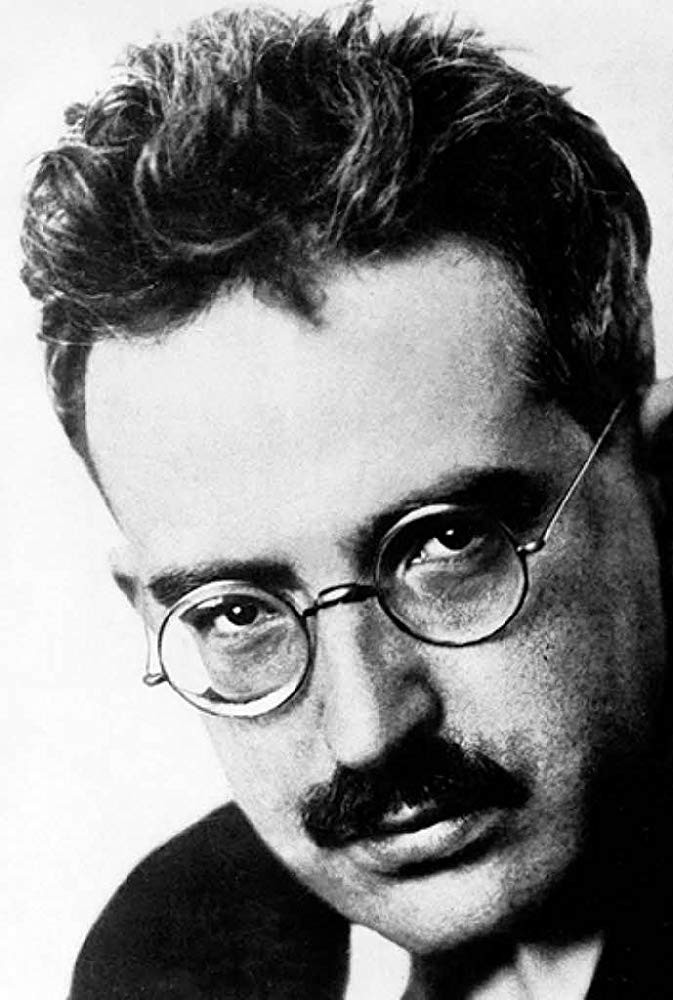
MAY’S MINIATURES – S.01 E.06: Walter Benjamin – ‘In a Big Old City’ [fragment] (c.1906-12)

Imagine yourself back in Vienna in the early years of the twentieth century. This is a city with historical Celtic migration and which suffered a plague in 1679 which wiped out a third of its population. It has been known for its composers – Haydn, Mozart, Beethoven. The BBC has reported that in 1913, Adolf Hitler, Leon Trotsky, Josip Broz Tito, Sigmund Freud and Joseph Stalin all lived within a few miles of each other in central Vienna, some of them becoming regulars at the same coffeehouses.

Walter Benjamin is best known for his philosophical history writing which is favoured by intellectual left-wingers. No syllabus seriously aiming to analyse culture is complete without his essay ‘The Work of Art in the Age of Mechanical Reproduction’. This German Jewish writer committed suicide in 1940 while on the French-Spanish border and trying to escape the advancing Wehrmacht. The rooting of this short fragment in Vienna cannot be random. This was both “Red Vienna” known for its socialist agitation and also the home of the “Austrian School” of liberal capitalist economists, the most famous of whom was Friedrich August von Hayek. They saw economics, jobs and money, being governed by the motivations and actions of individuals and they saw a regulatory state as oppressive. This story consists of two individuals. How do they choose to spend their time? Are they part of a society?

Broadcast on YouTube on Tuesday 14 July 2020 here:

More detailed analysis and thoughts on this story will appear here later.

MAY’S MINIATURES – S.01 E.05: Elizabeth Taylor – ‘The Fly-paper’ (1972)

I think much of the bleakness perceived in the 1960s or 70s has to do with an increasingly confident mass media reporting on and communicating the evil of acts of child murder. I remember when I was 10, the prevalence of the story of the murder of James Bulger in Liverpool. You couldn’t be shielded, maybe shouldn’t be from the facts of evil being done. This story by Elizabeth Taylor, born two decades before her more famous namesake, seems a precursor to the 1970s wave of public information films in Britain which used shocking narratives to jolt and petrify children into learning important lessons to make them safe. The Spirit of Dark and Lonely Water (1973) and Apaches (1977) will remain ingrained in the minds of most British people who are now in their fifties. 

As explained by Joanne Kingham in her introduction to Taylor’s Complete Short Stories, she submitted the story to the New Yorker, but William Maxwell didn’t like it and told her to consider altering the ending. Listen, now, to my reading of a horrifying tale that the New Yorker refused to publish. 

Broadcast on YouTube on Tuesday 7 July 2020:

Analysis and thoughts to be added later.

MAY’S MINIATURES – S.01 E.04: Graham Greene – ‘The Lieutenant Died Last’ (1940)

Now, in May 2020, we heard a lot about the Second World War. Understandably, as this was the seventy-fifth anniversary of D Day and a crucial step in the defeat of the Nazi German regime. You do get a lot of simplified myth making though, which ignores the complex, fraught and not at all homogeneous experiences of people during that conflict. Which brings us to my latest selection… 

Wordly, urbane, cynical, lapsed Catholic, full Catholic, left wing. Yep, it’s time for the Greenester! Graham Greenbrother Hugh Carleton Greene was a great reforming Director General of the BBC, allowing it to broadcast TW3, Steptoe and Son, Till Death Us Do Part, Up the Junction, Cathy Come Home. Mary Whitehouse hated him. Yep, we all know that! Lesser known is his role in propaganda broadcasting in the Second World War and Cold Warrior journalism during the Korean War. 

He was a hard-nosed liberal realist. Graham’s fiction isn’t too far removed from Hugh’s general outlook, but is crucially independent from his brother’s largely loyal Atlanticism. In his old age, Graham was opposing the US intervention in Nicaragua, a good example of Pinter’s law whereby you get more anti-establishment when you get older. In his younger days, Graham Greene did get a bee in his bonnet about the saccharine commercialism of Shirley Temple films and was embroiled in a libel suit for his negative view of the film Wee Willie Winkie in 1938. He claimed that the film’s sexualisation of its child star undermined its religious, pro-family values stance. He lost and 20th Century Fox and Temple were awarded £3500 in damages. Worth about 220 grand today! Eleven years later, he wrote the screenplay for The Third Man, which profoundly and chillingly exposes Harry Lime ‘s charming amorality and indifference to people’s lives amid wider society.

Now, I am going to read ‘The Lieutenant Died Last’… This was published in the American magazine Collier’s on 29 June 1940; it is Greene, by this time an MI6 intelligence officer, fashioning a morally complicated myth. This is stark, powerful storytelling published at the end of a dark month in British and world history. It says much about social class divisions, then and now, and makes it clear that “heroism” is not at all clear cut…

This episode was broadcast here on YouTube on Tuesday 30 June 2020.

Further analysis to follow at a later date!

MAY’S MINIATURES – S.01 E.03: Kurt Schwitters – ‘The Idiot’ (1941)

Ooh ah surrealist folk tale welcome!

This story was written in 1941 by a great and not well known enough German artist, Kurt Schwitters. Schwitters was born in 1887 in Hanover, West Saxony, in North Germany. I first learned of him via an exhibition of his work at Tate Britain, London, in April 2013. I borrowed a friend’s membership card so got in free! Schwitters’s art is a wonderfully everyday surreal art, collaging advertising slogans and material objects from the consumer capitalist society he far preferred to totalitarianism. Lots of sources call him non-political, like Piet Mondrian, but really this his work does embody a worldly liberalism historically embodied from the 12th to 19th centuries by the Hanseatic League. Hanover was a part of the Hansa, a trade confederation of merchant guilds in cities and market towns clustered around the Baltic.

Schwitters’s art work had been publicly ridiculed in the now Nazi Germany of 1935. His close friends the Spengemanns had been arrested by the Gestapo in 1936 and Schwitters fled Germany in January 1937, joining his son Ernst in Norway. Schwitters died in Kendal in 1948, after his experiences in 1940-41 as an ‘enemy alien’ internee in the Hutchinson Camp on the Isle of Man during the Second World War. His most famous work the Merz Barn was airlifted in the 1960s from the stone cottage in the Lake District it was made in to Newcastle upon Tyne where it now resides. I’ve seen it – it’s in the Hatton Gallery. It’s a towering, odd assemblage that has been well restored in recent years. Visit it yourself if you happen to be in Newcastle under non-lockdown conditions…

This is a powerful, very simple, folk tale-like short story from Schwitters which I’m sure you’ll enjoy:

Broadcast on YouTube here on 23 June 2020.

On their island, the fisherman and his wife – ‘a god-fearing couple’ – live well enough, depending on nature: ‘excellent fish and lobster’. The nearby townspeople – the fish merchants – are also ‘as innocent as a well-trained house cat, at least to outward appearances’.

The fisherman’s unnamed wife comes up with a scheme to make money – understandable as ‘everything is so expensive’. This involves employing an idiot to assist them with catching and selling the fish; who will also benefit them in that ‘The government will give us money to feed him’.

The idiot, however, shows more cunning than his nomenclature would suggest, selling the same lobster on from one merchant to another; he put the lobster into each pot, but then removed it, finally selling it at a lower price to the communal kitchen. The second merchant wanted the lobster to sell to the ‘big hotel’ that ‘needed’ it for the tourists.

In the saloon bar, the idiot ‘drank so much that he thought it was the best day of his life’. He enjoys the company of Rosa here, but she takes the remainder of his money when he was drunk. The idiot gets thrown out. Then come ‘regret’ and thoughts of the ‘future of his soul’ as a lady from the Salvation Army appears. He does regret, and thus gets coffee and cake and engages in religious singing. He takes the Panglossian view, as satirised by Voltaire in Candide (1759) that everything is as it should be on earth and that things will get better.

When the idiot then returns to the story’s original island, ‘feeling quite depressed’ and expecting to be ‘severely punished’ for his enterprising he also gets coffee and cake from the fisherman, for he was a very good man, or at least he appeared to be.’ (my emphasis) The fisherman heartily and gladly welcomes the idiot for his enterprising plan, as it accorded with his own dislike of the fish merchants.

Clearly, the fact that the idiot finally sells the lobster to a communal kitchen at a low price suggests a more socialist reading of the story. However, the idiot’s is clearly an individual agency; his act of generosity is the result of having money in the first place to paraphrase our not-so-glorious Prime Minister of 1979-1990. Schwitters shows generous largesse as bound up with personal gain.

The idiot does not invest his money, but he has a good time in the saloon: implying the carpe diem attitude within European working-class culture. However, he does ultimately benefit as he has inadvertently picked a side in the turf wars between the apparently ‘good’ lone fisherman and the fish merchants who are also associated with the ‘big hotel’. Surviving within the economic system requires aligning in power formations to rival what already exists – these have historically included guilds, trade alliances like the Hanseatic League, or, indeed, trade unions. It is implied that the idiot’s clever trickery might lead to a profitable arrangement with the fisherman and his wife in future, or, even… a beautiful friendship?

MAY’S MINIATURES – S.01 E.02: Anna Kavan – ‘A Bright Green Field’ (1958)

Anna Kavan is a writer I came across when searching for some weird short fiction. Born Helen Woods to wealthy British parents in Cannes, France in 1901 her work forms a temporal bridge between the Blitz in the Second World War and the psychedelic 1960s. Her work is often compared to the surrealist artist and writer Leonora Carrington and was praised by J. G. Ballard – who will later feature in this May’s Miniatures parish, or rather, lecture hall… Or is it boozer…?

‘The Old Address’ (1970) is a portrait of individual paranoia and addiction. The incarceration the narrator experiences is more than just that of the medical institution they are about to leave… This story, ‘A Bright Green Field’, from twelve years earlier, conveys one character’s inner world and perceptions of nature upon a train trip to an unnamed archetypal small town…

Broadcast on YouTube, Tuesday 16 June 2020:


NOT perfectly level, no. Not much is.

Size and colour are relative… And, as this story conveys, they are subject to an utterly subjective human perspective.

Kavan jabs subtly, ideologically: in how the passerby elides the workers toiling on the green with pulleys and the like. Conditions have apparently improved for these who are “not criminals but labourers”! The narrator questions their “health and efficiency” and this elicits an admission from the passerby that they are in danger. He uses the word “expendable” and also discursively places that as at the bottom of the social hierarchy. He makes light of their arduous labour and suffering by claiming they are just engaged in “mimicry” of an earlier generation of workers, and in fact have it far better now with “the introduction of the present system”.

Beyond simply this warped sense of historicism, it is notable that the passerby, in ‘brisk’ and ‘matter-of-fact’ tone, gives such a lengthy justification of the labour practices – workers who die there are “buried in situ”! His attempt at reassurance implies both local ‘pride’ but also a defensiveness which tells us that he is putting a gloss on what is ethically indefensible. Perhaps this polite man’s spiel emanates from propaganda that has been spread by the authorities in this settlement.

We never really get any sense of WHY the narrator is there, and that adds mystery and ambiguity. As far as I am aware there are no markings at all of their gender or appearance, which is perhaps more modern in some sense than in identity-centric 2020.

“The invisible armies of night” will battle the field’s colour. It seems to be a portrait of the narrator’s hyper-sensitivity to nature with its “ardent green” of the field. “Its horrid life”. There are adverbs like “fiercely” and countless aggressive verbs like “packed”, “resist”, “vibrating”, “pulsating”, “threatened”, “saw”, “check”, “burst”, “rear up”, “sweeping”, “spreading”, “destroying”, “covering”, “fought”, “cut down”, “was”, “threaten”, “crushed”, “grow”, “seen”, “fed”. Self-doubt is shown in the narrator’s modal auxiliary verb “might” towards the end.

The narrator’s own obscured torment seems to be reflected in their paranoid, obsessive and melancholy view of this landscape they habitually return to. There is a Borges or Ballard-like mock-grand perspective in the reference to “ancient archives kept hidden from us”. Some obscure “variation” that differed from the norm. As with J.G. Ballard’s great climate change dystopian novel The Drowned World (1962), there is a sense of the primal and what might easily underlie the bare sheen of ‘civilisation’. “Variation” suggests the language of Darwinian evolution.

Kavan’s story is an ambiguous, compelling enigma, utterly controlled in its language to convey the lack of individual control and the irrational ways in which we invariably see the world. The crucial middle section suggests the poisons of class hierarchy are intertwined with the absurd, quixotic attempts to control and tame nature.